
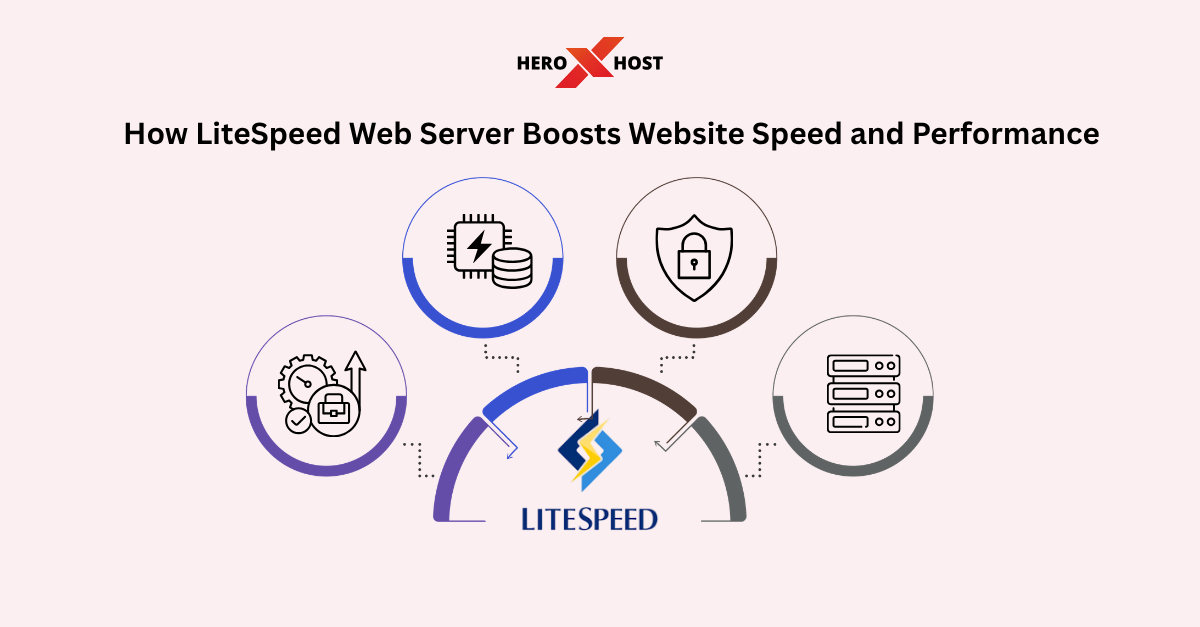
In today’s digital world, website speed is no longer just a technical advantage—it is a critical business necessity. Whether you run an eCommerce store, a business website, a blog, or a SaaS platform, your website’s loading speed directly impacts user experience, search engine rankings, conversions, and revenue. Studies consistently show that visitors expect websites to load within seconds, and even a small delay can significantly increase bounce rates while reducing customer trust. Search engines like Google also prioritize fast-loading websites through Core Web Vitals, making speed optimization essential for SEO success. This growing demand for high-performance websites has made server technology one of the most important factors in web performance. While many website owners focus on themes, plugins, and front-end optimization, the web server itself plays a major role in determining how efficiently content is delivered. This is where LiteSpeed Web Server has become a preferred choice for businesses and hosting providers looking to maximize speed, reliability, and scalability.
Table of Contents
ToggleWhat is LiteSpeed Web Server?
LiteSpeed Web Server (LSWS) is a high-performance web server software developed as a faster and more scalable alternative to traditional web servers like Apache. It is designed to provide exceptional speed, enhanced security, and efficient server resource management without requiring major configuration changes for existing websites. One of LiteSpeed’s biggest advantages is its compatibility with Apache configurations, including .htaccess files and mod_rewrite rules. This makes migration seamless for website owners who want better performance without rebuilding their server environment. LiteSpeed can replace Apache while preserving website functionality, offering a smooth upgrade path for businesses seeking improved speed. What truly sets LiteSpeed apart is its event-driven architecture. Unlike process-based servers that create separate processes for each connection, LiteSpeed efficiently manages multiple connections simultaneously using fewer resources. This architecture allows websites to process requests faster, reduce server load, and maintain performance even under high traffic conditions.
Event-Driven Architecture: The Core of LiteSpeed’s Speed
The foundation of LiteSpeed’s exceptional performance lies in its event-driven architecture. Traditional servers like Apache often rely on process-driven or thread-based systems, which can consume large amounts of CPU and RAM when handling multiple simultaneous visitors. As website traffic increases, this can lead to slower response times, server overload, and even downtime. LiteSpeed takes a more efficient approach by using asynchronous event-driven processing. Instead of assigning dedicated resources to every connection, LiteSpeed manages many requests through optimized event loops. This significantly reduces resource consumption while improving speed and concurrency. For website owners, this means faster Time to First Byte (TTFB), quicker page rendering, and better handling of traffic surges. Websites hosted on LiteSpeed often experience improved stability during marketing campaigns, product launches, or seasonal spikes because the server can process large traffic volumes without compromising speed.
LiteSpeed Cache: Built-In Performance Acceleration
One of the most powerful features of LiteSpeed Web Server is LiteSpeed Cache (LSCache), a server-level caching solution that dramatically improves website loading times. Caching works by storing pre-generated versions of web pages so they can be delivered instantly to users instead of being dynamically generated every time. Unlike traditional caching plugins that operate at the application level, LSCache works directly at the server level, making it significantly faster and more efficient. This allows websites—especially WordPress, WooCommerce, Magento, and other CMS platforms—to achieve major speed improvements with minimal server strain. LSCache includes advanced optimization tools such as browser caching, image optimization, lazy loading, CSS and JavaScript minification, database cleanup, and CDN integration. For WordPress users, the LiteSpeed Cache plugin offers one of the most comprehensive speed optimization solutions available, often outperforming many premium caching plugins. The result is faster page load times, lower bounce rates, and better Core Web Vitals scores, all of which contribute to stronger SEO performance and higher user engagement.
HTTP/3 and QUIC Support for Next-Level Performance
Modern web performance is increasingly dependent on protocol efficiency, and LiteSpeed stands out by supporting HTTP/3 and QUIC. These next-generation protocols significantly reduce latency and improve connection speeds compared to older HTTP/2 and TCP-based systems. QUIC improves data transmission by reducing handshake times and connection delays, especially for mobile users or visitors on unstable networks. HTTP/3 further enhances performance by delivering data more efficiently, resulting in faster secure connections and better browsing experiences. For websites with global audiences, eCommerce customers, or mobile-heavy traffic, LiteSpeed’s HTTP/3 support provides a major competitive advantage. Visitors experience faster page loads, smoother browsing, and reduced waiting times—critical factors for engagement and conversions.
Better Resource Management Means Lower Hosting Costs
Performance is not just about speed—it is also about efficiency. LiteSpeed’s optimized resource management helps hosting providers and website owners reduce CPU and RAM usage while serving more visitors. This means businesses can often handle larger traffic volumes without immediately upgrading to more expensive hosting plans. For startups, small businesses, and growing brands, this can lead to significant cost savings. Instead of overspending on infrastructure to compensate for inefficient server software, LiteSpeed allows businesses to maximize their existing resources while maintaining strong performance. This efficiency is especially beneficial for VPS hosting, cloud hosting, and dedicated server environments where resource allocation directly affects costs and scalability.
Enhanced Security Without Sacrificing Performance
Security is another critical area where LiteSpeed excels. Website speed means little if a server is vulnerable to attacks, downtime, or exploitation. LiteSpeed includes built-in anti-DDoS capabilities, connection throttling, and request filtering that help protect websites from malicious traffic. Its architecture is designed to mitigate brute-force attacks and suspicious connection patterns more effectively than many traditional server setups. Additionally, LiteSpeed supports ModSecurity rules, providing strong compatibility with popular security configurations. This combination of performance and protection ensures businesses do not have to choose between speed and security—they can achieve both simultaneously.
LiteSpeed vs Apache: Why the Difference is Significant
Apache has long been one of the most widely used web servers, but modern website demands have exposed performance limitations, especially under heavy traffic. Apache’s process-based model can become resource-intensive, leading to slower response times as concurrent requests grow. LiteSpeed, on the other hand, consistently outperforms Apache in speed benchmarks due to its event-driven design, server-level caching, and advanced protocol support. Websites migrating from Apache to LiteSpeed often report substantial improvements in page speed, server stability, and user experience without requiring major infrastructure changes. For businesses focused on SEO, user retention, and scalability, LiteSpeed offers a future-ready solution that aligns better with modern performance expectations.
LiteSpeed for WordPress and eCommerce Websites
WordPress powers a massive portion of the internet, and LiteSpeed is particularly valuable for WordPress websites. Through LSCache and advanced server optimization, WordPress sites can achieve dramatically improved load times, even when running resource-heavy themes or WooCommerce stores. For eCommerce websites, speed directly affects revenue. Slow checkout pages, delayed product loading, or server lag can increase cart abandonment rates. LiteSpeed helps online stores maintain smooth performance, fast transactions, and reliable scalability during high-demand periods like sales events or festive campaigns.
Conclusion: Why LiteSpeed is a Smart Investment for Website Growth
LiteSpeed Web Server is far more than just an alternative to traditional web servers—it is a strategic upgrade for businesses that value speed, scalability, security, and cost efficiency. Its event-driven architecture, LSCache technology, HTTP/3 support, and resource optimization create a high-performance hosting environment that meets the demands of modern websites. For businesses aiming to improve SEO rankings, user experience, and online conversions, LiteSpeed provides measurable advantages that directly impact growth. Whether you manage a startup website, a content-heavy blog, or a growing eCommerce platform, adopting LiteSpeed can be one of the most effective decisions for improving overall digital performance. In an increasingly competitive online environment, faster websites win. LiteSpeed gives businesses the technology needed to stay ahead.
Frequently Asked Questions (FAQs)
1. What is LiteSpeed Web Server?
LiteSpeed Web Server is a high-performance web server designed to deliver faster website speeds, better scalability, and improved security compared to traditional servers like Apache.
2. How does LiteSpeed improve website speed?
LiteSpeed improves speed through event-driven architecture, server-level caching, HTTP/3 support, and efficient resource management that reduces server load and speeds up content delivery.
3. Is LiteSpeed better than Apache?
Yes, LiteSpeed generally offers faster performance, lower resource consumption, and better scalability than Apache, especially for high-traffic websites.
4. What is LiteSpeed Cache (LSCache)?
LSCache is LiteSpeed’s built-in server-level caching system that stores optimized page versions for faster delivery, improving loading speed and Core Web Vitals.
5. Is LiteSpeed good for WordPress websites?
Yes, LiteSpeed is highly optimized for WordPress and works exceptionally well with the LiteSpeed Cache plugin for improved speed and SEO.
6. Does LiteSpeed support HTTP/3?
Yes, LiteSpeed supports HTTP/3 and QUIC protocols, which reduce latency and improve performance, especially for mobile users.
7. Can LiteSpeed handle high traffic websites?
Yes, LiteSpeed is designed to efficiently manage large traffic volumes while maintaining speed and server stability.