
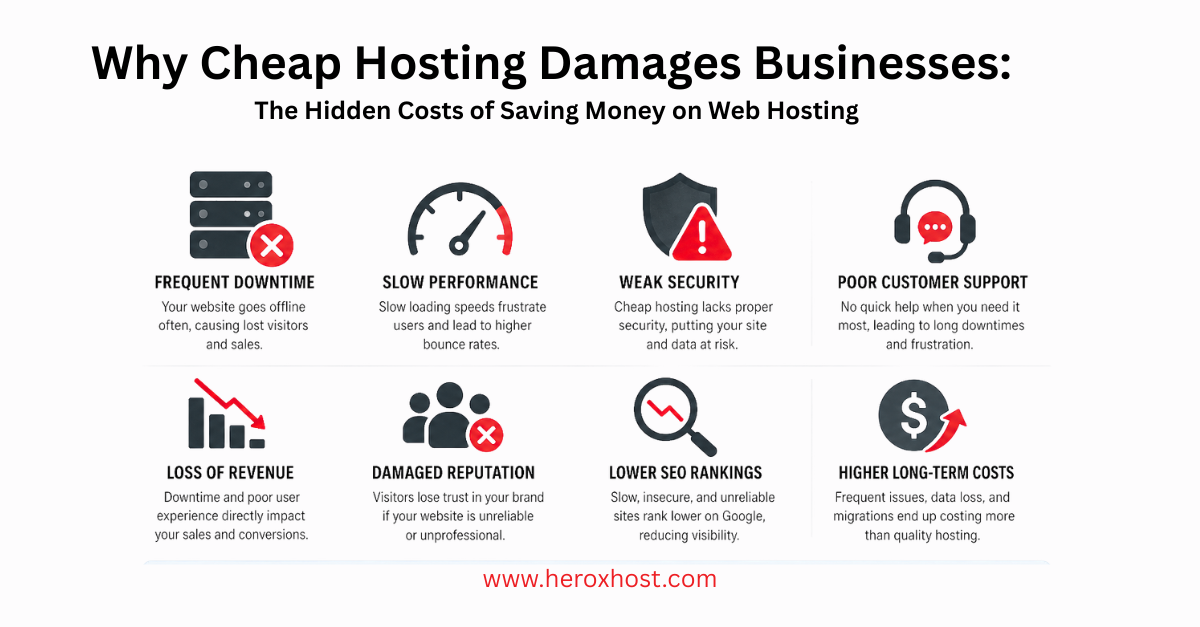
In today’s competitive digital landscape, a business website is more than just an online presence—it is often the foundation of brand identity, customer engagement, lead generation, and revenue growth. Whether you own a small startup, an eCommerce platform, or a corporate business, your website serves as a 24/7 storefront that directly impacts how customers perceive your brand. Because of this, web hosting plays a far bigger role in business success than many companies realize. Unfortunately, many businesses make the mistake of prioritizing low prices over quality when choosing hosting services. Cheap hosting plans often look attractive because they promise affordability, free add-ons, and easy setup. For businesses trying to reduce operational expenses, these plans may seem like the perfect choice. However, what appears affordable upfront can quickly become expensive in hidden ways. Poor performance, frequent downtime, security vulnerabilities, and weak support can all silently damage your business. The real issue is not the monthly hosting fee—it is the long-term cost of compromised website functionality. Cheap hosting can become one of the most expensive “money-saving” decisions a business makes.
Table of Contents
TogglePoor Website Speed Can Cost Customers and Revenue
Website speed is one of the most critical factors in online business performance. Modern users expect websites to load quickly, and if a page takes too long, they are likely to leave before even viewing your products or services. Cheap hosting providers often oversell their servers, placing too many websites on shared resources to maximize profit. This overcrowding causes slower loading speeds, inconsistent performance, and delayed server response times. For businesses, slow speed directly affects user experience and conversion rates. If potential customers experience lag while browsing your site, they may assume your business is unreliable or outdated. In eCommerce, even a slight delay in page load time can lead to abandoned carts and lost sales. A business may spend heavily on digital marketing campaigns to attract traffic, but poor hosting performance can waste that investment by driving users away before they convert.
SEO Damage: Cheap Hosting Can Lower Search Rankings
Search engine optimization is essential for online visibility, but many business owners fail to realize how much hosting quality influences SEO. Search engines like Google prioritize websites that load quickly, remain consistently available, and provide positive user experiences. Cheap hosting can negatively affect all of these factors. If your website regularly loads slowly or experiences downtime, search engines may rank it lower than competitors with better performance. This means even excellent content and keyword strategies can struggle to deliver results. Businesses investing time and money into SEO may unknowingly sabotage their own progress by choosing unreliable hosting. Over time, lower rankings reduce organic traffic, making it harder to attract potential customers without increasing advertising costs.
Frequent Downtime Creates Hidden Financial Losses
Website downtime is one of the most damaging hidden costs of cheap hosting. Every minute your website is inaccessible can mean missed sales, lost leads, and reduced customer trust. Low-cost hosting providers often rely on outdated infrastructure, overloaded servers, or limited maintenance capabilities, increasing the likelihood of outages. For online stores, downtime can immediately impact revenue. For service-based businesses, it can mean losing inquiries from potential clients. Even if downtime occurs during off-peak hours, it still damages SEO performance and business credibility. Customers expect websites to be accessible at all times, and repeated outages may push them toward competitors. While cheap hosting may save a small monthly fee, the financial losses caused by downtime can be significantly higher.
Weak Security Puts Business Data at Risk
Cybersecurity is a growing concern for businesses of every size, and cheap hosting often fails to provide adequate protection. Budget hosting plans may lack advanced security tools such as malware scanning, firewalls, automatic backups, DDoS protection, and proactive monitoring. This creates vulnerabilities that hackers can exploit. A hacked website can lead to stolen customer information, financial fraud, SEO penalties, or even complete website shutdown. For businesses handling customer payments or sensitive information, poor security can create legal liabilities and destroy customer trust. Recovering from a cyberattack often costs far more than investing in quality hosting from the start. In business, security is not optional—it is essential.
Limited Customer Support Can Turn Small Issues into Major Problems
Technical issues are inevitable in the online world, which is why reliable customer support is so important. Cheap hosting providers often cut costs by offering limited support channels, slow response times, or poorly trained support staff. When a website crashes or experiences performance issues, delayed assistance can extend downtime and increase business losses. For business owners, every hour spent waiting for support can mean missed opportunities and frustrated customers. Quality hosting providers usually offer 24/7 technical support with knowledgeable teams that can quickly resolve issues. This difference can be critical during emergencies. Cheap hosting may reduce monthly expenses, but poor support can dramatically increase operational risks.
Scalability Problems Can Restrict Business Growth
As businesses grow, website demands increase. More traffic, larger product catalogs, higher transaction volumes, and expanding content all require stronger hosting infrastructure. Cheap hosting plans are often designed for basic websites with minimal resource demands, making them unsuitable for growing businesses. When traffic increases unexpectedly, cheap hosting can lead to crashes, slowdowns, or bandwidth limitations. This can become especially problematic during marketing campaigns, seasonal sales, or business expansion. Businesses that outgrow their hosting often face stressful migrations, unexpected upgrade costs, and technical disruptions. Choosing scalable hosting from the beginning helps avoid these challenges and supports long-term growth.
Brand Reputation Suffers When Hosting Performance Fails
Your website often forms the first impression customers have of your business. A slow, broken, or frequently unavailable website can damage trust almost instantly. Customers may associate technical problems with poor professionalism, even if your products or services are excellent. In competitive industries, trust is a powerful differentiator. If your website experiences security warnings, crashes, or poor functionality, users may choose a competitor with a smoother experience. Reputation damage can be difficult and expensive to repair. Investing in quality hosting protects not only your website but also your brand image.
Cheap Hosting Can Impact Business Communication
Many businesses use hosting services for professional email accounts. relible web hosting providers may share server space with spam-heavy websites, which can negatively affect IP reputation. This increases the chance that your business emails land in spam folders. Poor email deliverability can affect customer communication, sales follow-ups, and client trust. Missed emails may result in lost contracts or weakened customer relationships. Reliable hosting providers often maintain cleaner server reputations and better email performance, supporting smoother business communication.
The Difference Between Affordable Hosting and Cheap Hosting
It is important to understand that affordable hosting and cheap hosting are not the same. Affordable hosting focuses on delivering value through balanced pricing, performance, security, and support. Cheap hosting often prioritizes the lowest possible cost while sacrificing critical business needs. Businesses should evaluate hosting based on uptime guarantees, speed, customer support, security features, and scalability—not just monthly price. A slightly higher investment in reliable hosting can prevent larger financial and reputational losses later.
Conclusion: Cheap Hosting Often Costs More Than Premium Hosting
Cheap hosting may appear cost-effective at first glance, but its hidden costs can severely damage business performance over time. From slower website speeds and SEO struggles to security risks, downtime, and lost customer trust, the long-term consequences often outweigh the initial savings. For businesses, web hosting should never be treated as just another expense—it is a strategic investment in online success. Choosing reliable hosting helps ensure better performance, stronger security, consistent customer experiences, and sustainable growth. In the business world, saving a little today can cost much more tomorrow if your hosting foundation is weak.
FAQs
1. Why does cheap hosting hurt business websites?
Cheap hosting often causes slow speed, downtime, weak security, and poor support, which negatively impacts growth.
2. Can cheap hosting affect my Google ranking?
Yes, poor speed and uptime can reduce SEO performance and lower search engine visibility.
3. Is cheap shared hosting bad for startups?
It may work temporarily, but growing businesses often need better performance and scalability.
4. How does hosting security impact businesses?
Better hosting protects customer data, prevents hacking, and supports brand trust.
5. What is the biggest hidden cost of cheap hosting?
Lost customers and damaged reputation are often the most expensive consequences.
6. Should businesses always choose premium hosting?
Not always premium, but reliable and scalable hosting is usually the smarter choice.
7. Can downtime really affect sales?
Yes, website downtime can directly lead to missed revenue and lost leads.
8. What should I prioritize when selecting hosting?
Speed, uptime, security, support, and scalability should be top priorities.