Choosing the right web hosting service in 2026 is no longer merely dependent on storage space and a low price. With AI-driven websites and the growing expectations, requirements, and focus on Google’s priorities regarding functionality, the hosting service has very firmly come to the foundation level of success in the online world. It matters whether you are building a personal, business, or e-commerce site, and your hosting service impacts your browsing speed and SEO.
In the following text, we are going to break down all there is that you need to know about selecting the best website hosting solutions by 2026, from the easy facts to more complex pieces, all explained without all the tech speak so that you make an informed decision about the best website hosting solutions by 2026.
Why Web Hosting Matters More Than Ever in 2026
By 2026, a website should load in an instant, be available 24/7, and offer fluent experiences regardless of devices used. Unreliable performance can negatively impact page ranking and conversion rates and result in a loss of visitors in a matter of seconds. Search engine optimization algorithms are now placing more importance on performance metrics such as Core Web Vitals, availability, and server response time than before.
However, the threats associated with the cyber world have evolved as well, and protection in hosting services has become a matter of high concern rather than a luxury. Nowadays, the best hosting services come along with the expectations of high security, backups, and smart monitoring. Even the selection of a web host is not a technical matter anymore—it’s strategic.
Understand Your Website Needs First
Before comparing hosting providers, the most important step is understanding what your website actually needs. A simple blog, a business website, and a high-traffic e-commerce store all require different hosting resources.
If you’re starting a small website or portfolio, shared hosting may be enough initially. Growing businesses, SaaS platforms, and online stores usually need VPS or cloud hosting for better speed and reliability. Websites that expect heavy traffic, custom applications, or large databases require scalable infrastructure from day one. Choosing hosting without considering your growth plans often leads to frequent migrations, downtime, and added costs later.
Types of Web Hosting in 2026 Explained Simply
Shared hosting is still common among small-scale websites, though it has lost popularity because of performance issues. When you use shared hosting, you share a server with many people, and this affects the performance of your website in case of a rush of traffic.
VPS hosting provides the dedicated resources of a hosting solution within a virtual atmosphere. In 2026, VPS hosting is actively utilized by small ventures or companies because of the combination of affordability with performance.
Cloud hosting is now the norm as far as scalability is concerned. With cloud hosting, a website can span multiple servers, and a single server is not used. This ensures that the site performs well and loads faster.
Performance and Speed: A Non-Negotiable Factor
Website speed is a ranking factor, a conversion driver, and a user experience requirement in 2026. Hosting plays a massive role in how fast your website loads. Look for hosting that uses NVMe or SSD storage, optimized server configurations, and built-in caching systems. Cloud-based infrastructure and edge servers also improve loading speeds for users across different locations.
A good hosting provider should offer consistently low server response times and stable performance even during high traffic periods. Speed is no longer a luxury—it’s the baseline.
Uptime and Reliability Standards in 2026
Unavailability regarding 2026 means loss of sale, trust, and search engine positions. Nowadays, trustworthy web hosting companies can offer 99.9% and above uptimes with effective tools and reliable designs. Modern hosting platforms come with AI tools like monitoring, capable of detecting issues before they result in downtimes. Additionally, there is failover software that can move operations to another server in case it goes down.
When choosing a hosting provider, it is worth looking into the track record of its uptime, fault-tolerance provisions, and disaster recovery processes—not just guarantees on the sales page.
Security Is a Core Hosting Requirement
Cyber threats are increasing in frequency and complexity. In the year 2026, security hosting is no longer an option; it is a need. The most reliable web hosting companies should provide features such as free SSL certificates, firewall security protection, malware scanning, DDoS attack protection, and security updates. Automatic backup options are also necessary for restoring the system within a short time whenever there is an attack or loss of data.
AI-powered threat protection hosting platforms are able to detect early signs of malicious behavior, preventing any breach of website security. A secured hosting platform not only safeguards your website but also your users.
Scalability: Prepare for Growth from Day One
One of the largest blunders that website owners tend to undergo would be the use of hosting that cannot scale. The year 2026 would experience growth at an instance that would include viral content, advertisement, and seasonality.
It can help in scaling the hosting infrastructure like CPU, RAM, and bandwidth without any downtime. Cloud hosting and managed VPS are quite effective in scaling. Scalable hosting by choice means your site remains seamless even if traffic grows and does not force new hosting changes.
Managed Hosting vs Unmanaged Hosting
Managed hosting is gaining popularity, especially among non-technical users, in 2026. In managed hosting, updates on the server, as well as overall performance, are managed by the provider. Unmanaged hosting provides increased flexibility but demands technical know-how. This is most commonly favored by developers and system administrators.
Managed hosting can prove quite helpful for businesses and new users, helping them save time and stay away from potential risks by focusing on expansion and growth rather than server-related activities, which can sometimes take priority for them.
Support Quality Matters More Than Price
When anything goes wrong with your website, quick expert assistance makes all the difference. By 2026, 24/7 support via chat, tickets, or over the phone will be the norm. Look at web hosts that provide skilled support staff, not just mere customer support representatives. Equally, artificial intelligence support systems are also growing, in which problems will be more quickly resolved, or even if it can notify proactively.
Having a reliable source of support can give you the peace of mind that you need, particularly in critical conditions such as peak traffic or updates.
Pricing Transparency and Long-Term Value
Such low-cost web hosting plans come with some concealed restrictions, price increments at the time of renewal, and some features that may not exist at all. In the year 2026, smart consumers look at the long-term value and not at the cheapest initial price.
See what you get in the package, including storage space, bandwidth, backups, security, etc. Open pricing plans are a good sign of a reputable hosting company.
Final Thoughts: Choosing Future-Ready Hosting in 2026
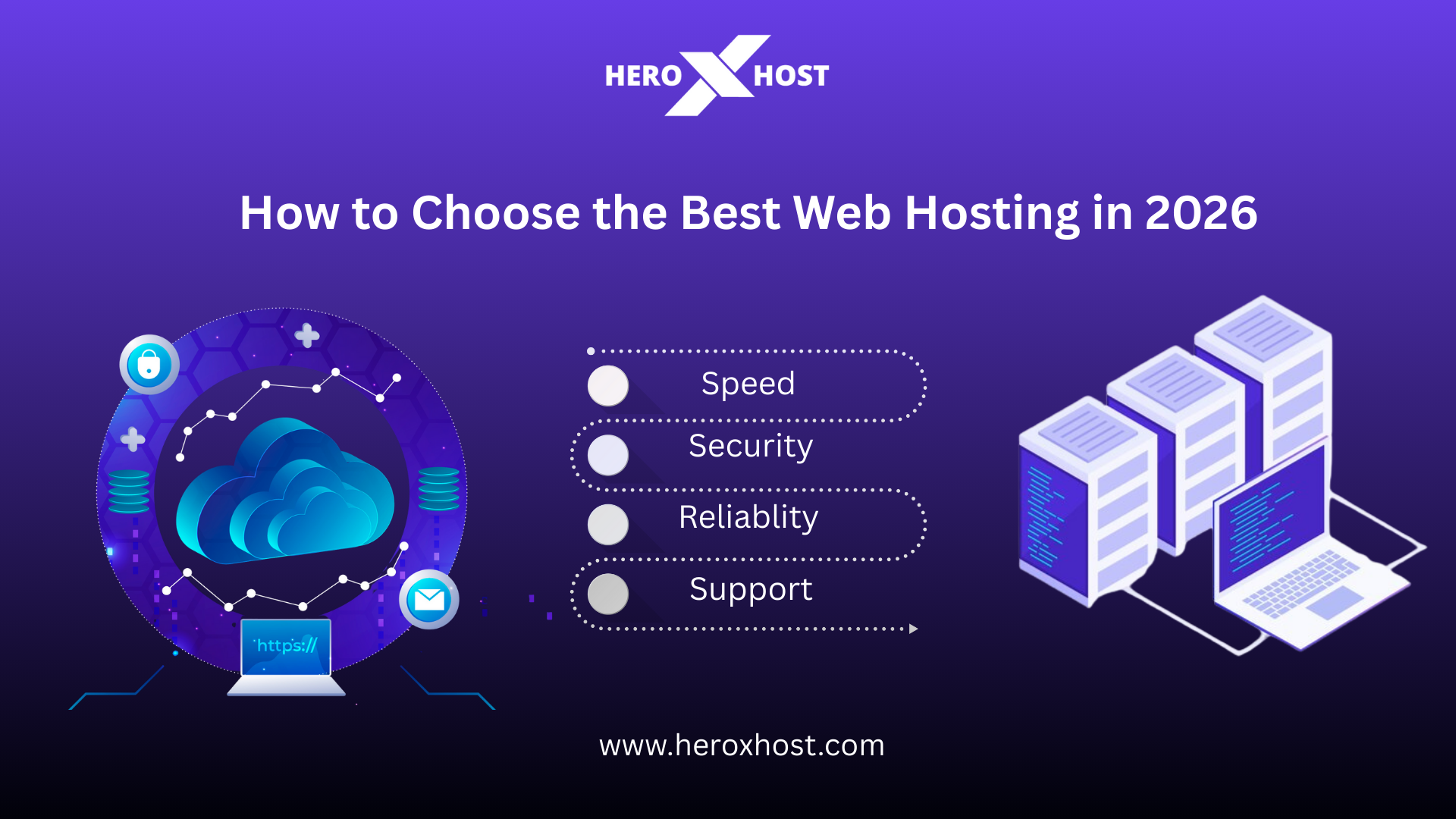
The key to picking the best web host in 2026 lies in having the right mix of performance, security, scalability, and customer support. The web host you pick is much more than a service provider—it’s an ally for the success and maintenance of your website.
Through understanding the needs of your website and focusing on the aspects that matter most, such as speed and security, as well as choosing a hosting service with Heroxhost that is designed for growth, we have the ability to create the right foundation that will meet our objectives of today as well as the demands of tomorrow.
Frequently Asked Questions (FAQs)
1. What is the best type of web hosting in 2026?
Ans. Cloud hosting is considered the best option in 2026 due to its scalability, speed, and reliability.
2. Is shared hosting still good in 2026?
Ans. Shared hosting is suitable only for small or beginner websites with low traffic.
3. Why does web hosting affect SEO in 2026?
Ans. Hosting impacts page speed, uptime, and Core Web Vitals, which directly influence search rankings.
4. How important is website speed when choosing hosting?
Ans. Website speed is critical because slow-loading sites lose users, conversions, and SEO visibility.
5. What security features should hosting include in 2026?
Ans. SSL, firewalls, malware protection, DDoS mitigation, and automated backups are essential.