For many businesses, website performance issues do not arrive suddenly. They appear gradually. A page that once loaded instantly starts taking a few extra seconds. Traffic grows, but so do complaints. Security warnings begin to appear more often. Updates feel riskier. Downtime becomes more expensive.
Typically, the website itself is not the root cause of the problem at this point. The supporting hosting infrastructure tends to be the actual source of trouble. In 2026, websites have evolved beyond simple online pamphlets. They now function as revenue generators, platforms for capturing potential clients, hubs for customer interaction, and vital instruments for business activities. As companies expand, their websites necessitate enhanced velocity, more robust defenses, and more comprehensive oversight. Shared hosting, a suitable option initially, frequently transforms into an impediment rather than a firm groundwork.
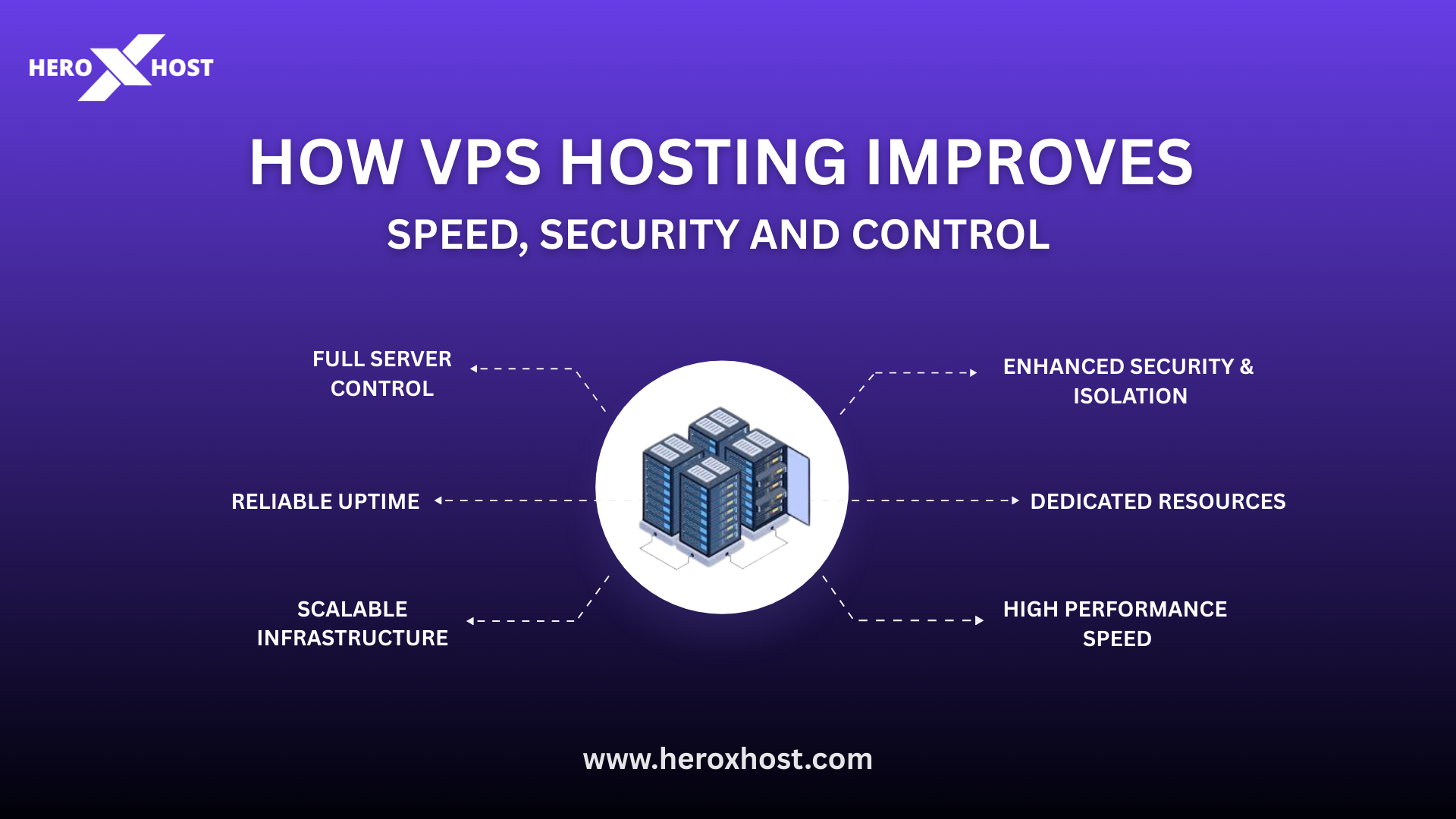
This is the point where VPS hosting becomes relevant. Virtual Private Server (VPS) hosting occupies a middle ground between shared hosting and dedicated servers, delivering an equilibrium that is notably advantageous for businesses undergoing expansion. It offers better functioning, enhanced segregation, and greater command – without the financial strain or intricacy associated with running a complete physical server.
This manual clarifies, using concrete examples, the ways in which VPS hosting augments the swiftness, fortification, and administration of commercial websites, elucidating its emergence as a pivotal infrastructural decision in 2026.
Table of Contents
ToggleUnderstanding the Real Bottlenecks of Business Websites
Before discussing VPS hosting, it is important to understand what actually holds business websites back as they grow.
In the early stages, shared hosting works because resource demands are low. Traffic is manageable. Security risks are minimal. Performance expectations are modest. But as a business website evolves, several pressure points begin to appear.
Traffic patterns begin to display more erratic behavior. The implementation of advertising strategies causes sudden surges in activity. Individuals using the internet anticipate web pages to load without delay. Internet search platforms give preferential treatment to websites that exhibit quicker response times. Simultaneously, the danger of online security breaches grows. The automated malicious intrusions, bot-driven internet activity, and weaknesses in system defenses aim at any digital platform that processes information or financial exchanges.
The third obstacle revolves around having command. Enterprises require the ability to incorporate various utilities, fine-tune operational effectiveness, set up data storage mechanisms, oversee configurations at the foundational level, or implement a wider range of software solutions than just typical WordPress installations. Hosting services shared among multiple users are purposely made to have limitations. They place higher importance on providing a secure environment for a large user base instead of granting comprehensive control to a singular enterprise undergoing expansion.
When these three pressures—speed, security, and control—collide, businesses start looking for a better foundation.
What VPS Hosting Really Is (Beyond the Technical Definition)
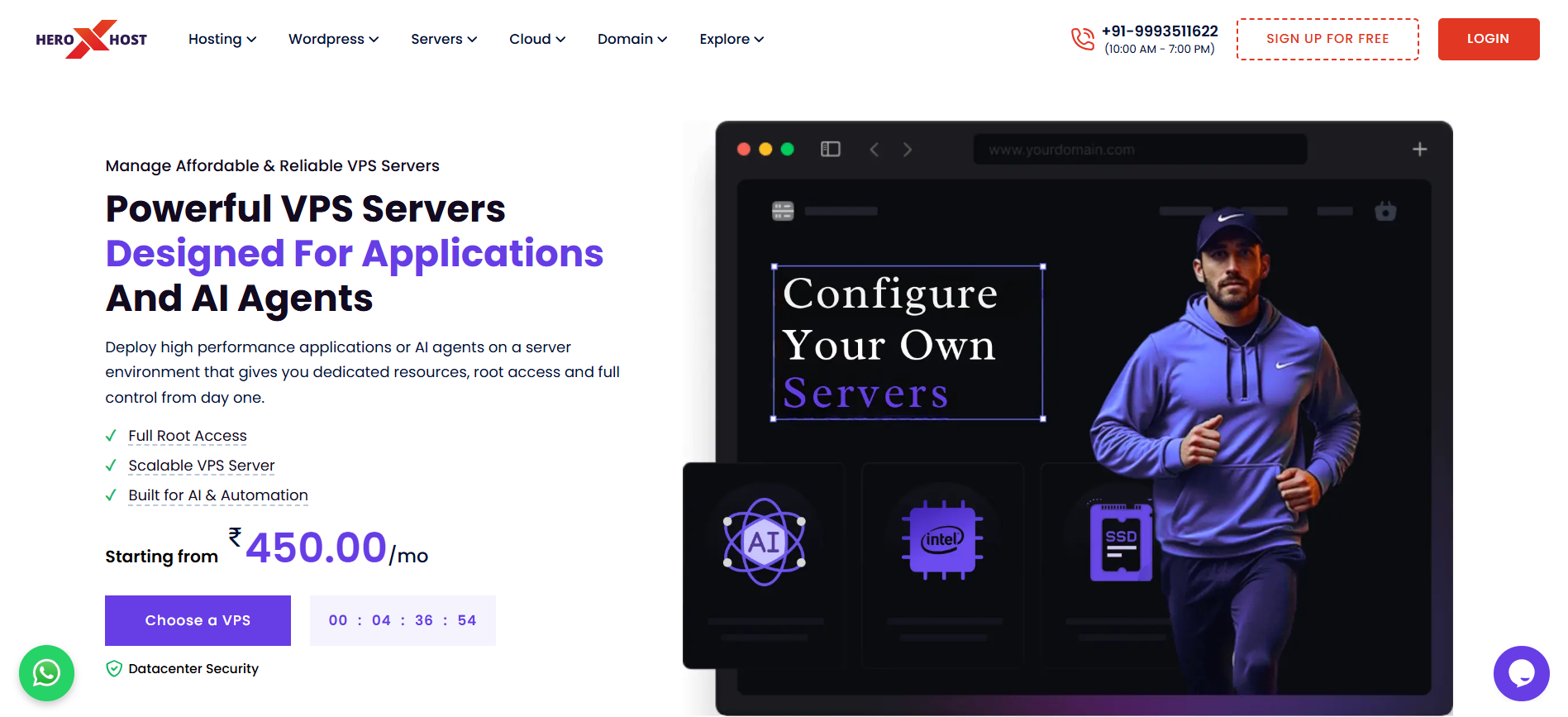
Technically, a VPS is a virtualized server environment created by dividing a physical server into multiple independent virtual servers. Each VPS has its own allocated resources, operating system, and isolated environment.
But from a business hosting perspective, VPS hosting is better understood as a private workspace within shared infrastructure.
Instead of competing for resources with hundreds of unknown websites, a VPS gives your business a defined slice of server power. Instead of relying on generic security rules, your site operates in an isolated environment. Instead of working around limitations, you gain the flexibility to configure your hosting to suit your needs.
VPS hosting does not aim to replace dedicated servers for enterprise-scale operations. Its strength lies in providing control and performance without unnecessary overhead—which is exactly what growing businesses need.
How VPS Hosting Improves Website Speed
Speed is not just a technical metric. It directly affects user experience, conversions, SEO rankings, and brand perception. In 2026, slow websites are simply not tolerated.
Dedicated Resources Mean Predictable Performance
One of the biggest limitations of shared hosting is resource contention. CPU, RAM, and disk I/O are shared among many websites. If one site experiences a traffic spike or runs heavy processes, others feel the impact.
VPS hosting eliminates this unpredictability. Your website receives dedicated resources. CPU cores, memory, and storage bandwidth are allocated specifically to your VPS. This means your performance remains consistent, regardless of what other users on the physical server are doing.
For businesses running campaigns, launches, or seasonal promotions, this predictability is critical.
Faster Response Times Under Load
As websites grow, they do more work. They process form submissions, handle user logins, serve dynamic content, and interact with databases. Shared hosting environments often struggle under these workloads.
VPS hosting is designed to handle concurrency. With dedicated resources and optimized server configurations, your website can serve multiple users simultaneously without slowing down. This directly translates to faster page load times and smoother user interactions.
Advanced Caching and Performance Optimization
Shared hosting environments limit what you can do at the server level. VPS hosting removes these constraints.
Businesses can configure advanced caching layers, optimize PHP versions, adjust memory limits, and fine-tune server settings. This level of optimization is especially valuable for WordPress, e-commerce platforms, and custom applications.
With VPS hosting, performance tuning becomes proactive rather than reactive.
NVMe SSD Storage and Modern Infrastructure
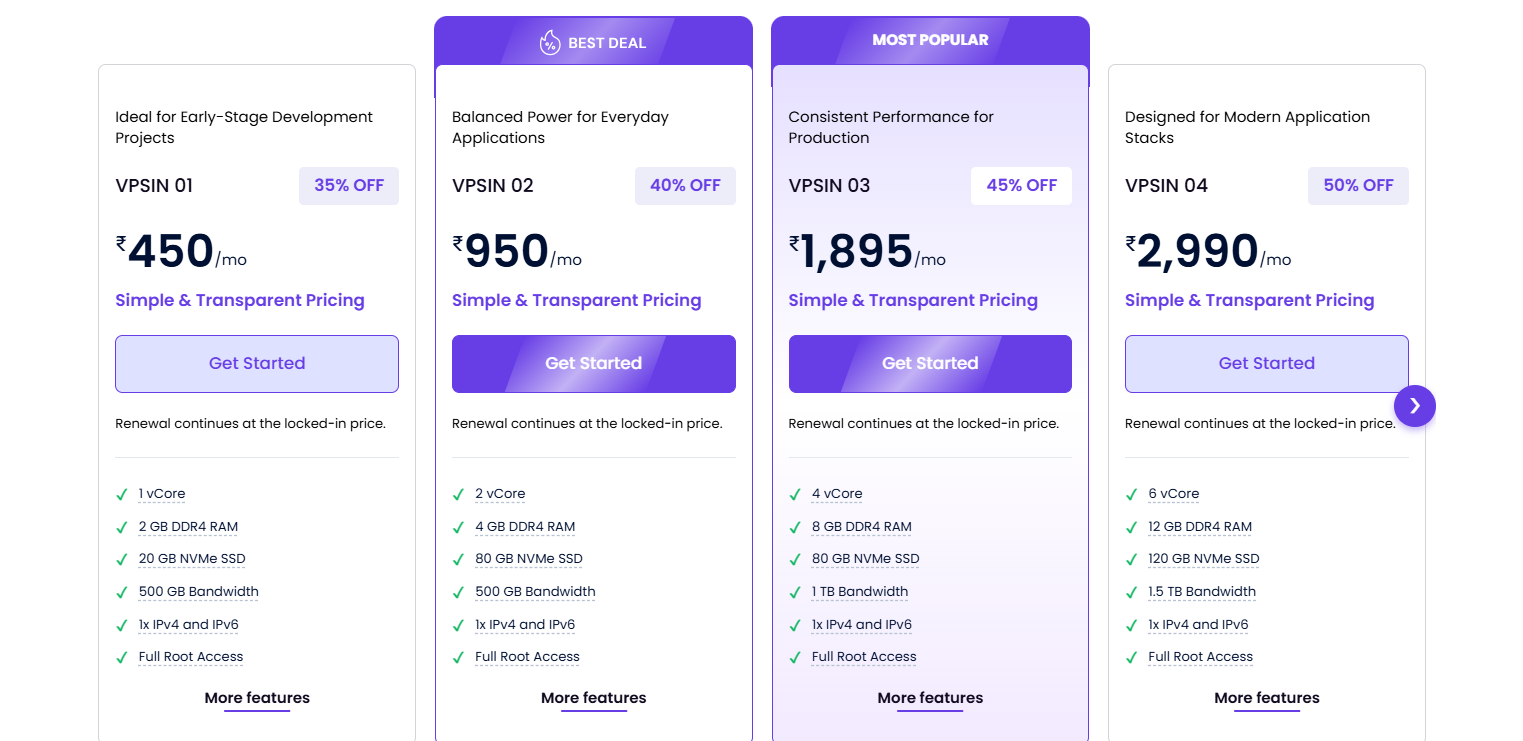
Modern VPS hosting platforms, including Heroxhost, use NVMe SSD storage. This significantly improves data access speeds compared to traditional SSDs or HDDs.
For businesses, this means faster database queries, quicker file access, and reduced latency across the website. The result is a noticeably smoother experience for users and better performance signals for search engines.
How VPS Hosting Strengthens Website Security
Security concerns often become the deciding factor when businesses upgrade hosting. In 2026, threats are automated, persistent, and increasingly sophisticated.
Isolation Reduces Risk Exposure
In shared hosting, a vulnerability in one website can potentially affect others on the same server. This is known as “cross-account contamination,” and it remains a common risk.
VPS hosting provides environment-level isolation. Your website operates independently from others. Even if another VPS on the same physical server is compromised, your environment remains protected.
This isolation alone dramatically reduces security exposure.
Greater Control Over Security Configuration
Shared hosting applies one-size-fits-all security rules. VPS hosting allows businesses to implement security strategies that match their risk profile.
Firewalls, intrusion detection systems, access controls, and server-level hardening can be configured precisely. This is especially important for websites handling customer data, payments, or internal business processes.
With VPS hosting, security is no longer a passive feature. It becomes an active strategy.
Safer Updates and Testing
As websites grow more complex, updates carry risk. Plugin conflicts, version mismatches, or configuration changes can cause downtime or vulnerabilities.
VPS hosting enables safer workflows. Businesses can test changes, stage updates, and control server behavior more precisely. This reduces the likelihood of unexpected failures and security gaps.
Better Protection Against Traffic Spikes and Attacks
Traffic spikes are not always legitimate. DDoS attempts, bot traffic, and brute-force attacks can overwhelm shared hosting environments.
VPS hosting offers better resilience. With defined resource limits and stronger server-level controls, your website is better equipped to handle abnormal traffic without crashing.
For businesses, uptime during critical periods is non-negotiable.
How VPS Hosting Gives Businesses Real Control
Control is often the least understood benefit of VPS hosting, yet it is one of the most valuable.
Freedom to Customize the Server Environment
Shared hosting restricts customization to protect the shared environment. VPS hosting removes these restrictions. Businesses can choose operating systems, configure software stacks, install required tools, and adjust server behavior to match application needs. This flexibility supports innovation and scalability.
Whether you are running WordPress, custom PHP applications, APIs, or multiple projects, VPS hosting adapts to your workflow.
Scalability Without Disruption
One of the strongest advantages of VPS hosting is scalability. As your business grows, you can increase resources—CPU, RAM, storage—without migrating to a new server or reconfiguring everything from scratch. This allows your infrastructure to grow alongside your business, not ahead of it or behind it.
At Heroxhost, VPS upgrades are designed to be seamless, ensuring minimal disruption.
Hosting Multiple Projects with Confidence
Many businesses eventually manage more than one website. Marketing sites, blogs, landing pages, client portals, and internal tools often coexist.
VPS hosting provides the space and control to host multiple projects securely and efficiently. Resource allocation can be managed intelligently, ensuring that one project does not negatively impact others.
Reduced Dependency on Hosting Support for Every Change
Shared hosting users often rely heavily on support teams for basic configuration changes. VPS hosting empowers businesses to take control.
This does not mean businesses are left alone. Managed VPS solutions combine flexibility with expert support, ensuring that infrastructure is maintained while businesses retain control over their environment.
Why VPS Hosting Is a Strategic Choice in 2026
In 2026, technology decisions are business decisions. Websites are no longer optional assets. They influence customer trust, operational efficiency, and revenue. Hosting infrastructure must support these realities. VPS hosting represents a shift from “getting online” to “operating professionally.” It allows businesses to move beyond limitations without overinvesting in infrastructure they do not yet need.
It is not about complexity. It is about readiness.
Why Heroxhost VPS Hosting Fits Growing Businesses
At Heroxhost, VPS hosting is designed with business growth in mind. The infrastructure focuses on performance, security, and scalability, while removing unnecessary complexity. NVMe SSD storage, modern server architecture, and proactive monitoring ensure that businesses receive reliable performance from day one.
Heroxhost VPS solutions balance control with support, allowing businesses to focus on growth rather than server management. Whether you are upgrading from shared hosting or planning for future expansion, Heroxhost ensures that your hosting environment evolves with you.
Frequently Asked Questions
1. Is VPS hosting necessary for small businesses?
Ans. VPS hosting becomes valuable when performance, security, or control limitations begin to affect operations. Many small businesses upgrade to VPS as soon as their website becomes business-critical.
2. Will VPS hosting improve SEO?
Ans. Yes. Faster load times, better uptime, and improved performance stability contribute positively to SEO and user experience.
3. Is VPS hosting difficult to manage?
Ans. With managed VPS hosting from Heroxhost, technical complexity is handled by experts, allowing businesses to benefit from VPS advantages without operational burden.
4. Can I upgrade from shared hosting to VPS easily?
Ans. Yes, Heroxhost supports smooth migrations and scalable upgrades to ensure minimal disruption during the transition.
5. Is VPS hosting secure enough for e-commerce?
Ans. VPS hosting provides the isolation, control, and performance required for e-commerce and data-sensitive websites.
Conclusion: VPS Hosting as a Foundation for Growth
The right hosting is not the cheapest option, nor the most powerful. It is the one that aligns with how important your website is to your business. VPS hosting improves speed by providing dedicated resources and modern infrastructure. It strengthens security through isolation and control. It empowers businesses with flexibility and scalability that shared hosting cannot offer.
In 2026, growing businesses need hosting that supports ambition rather than restricts it. Heroxhost VPS hosting is built to deliver that foundation—secure, scalable, and ready for growth. If your website is becoming central to your operations, it may be time to move beyond shared hosting and invest in infrastructure that grows with you. Choose Affordable and secure hosting.
Choose VPS hosting. Choose control. Choose Heroxhost.