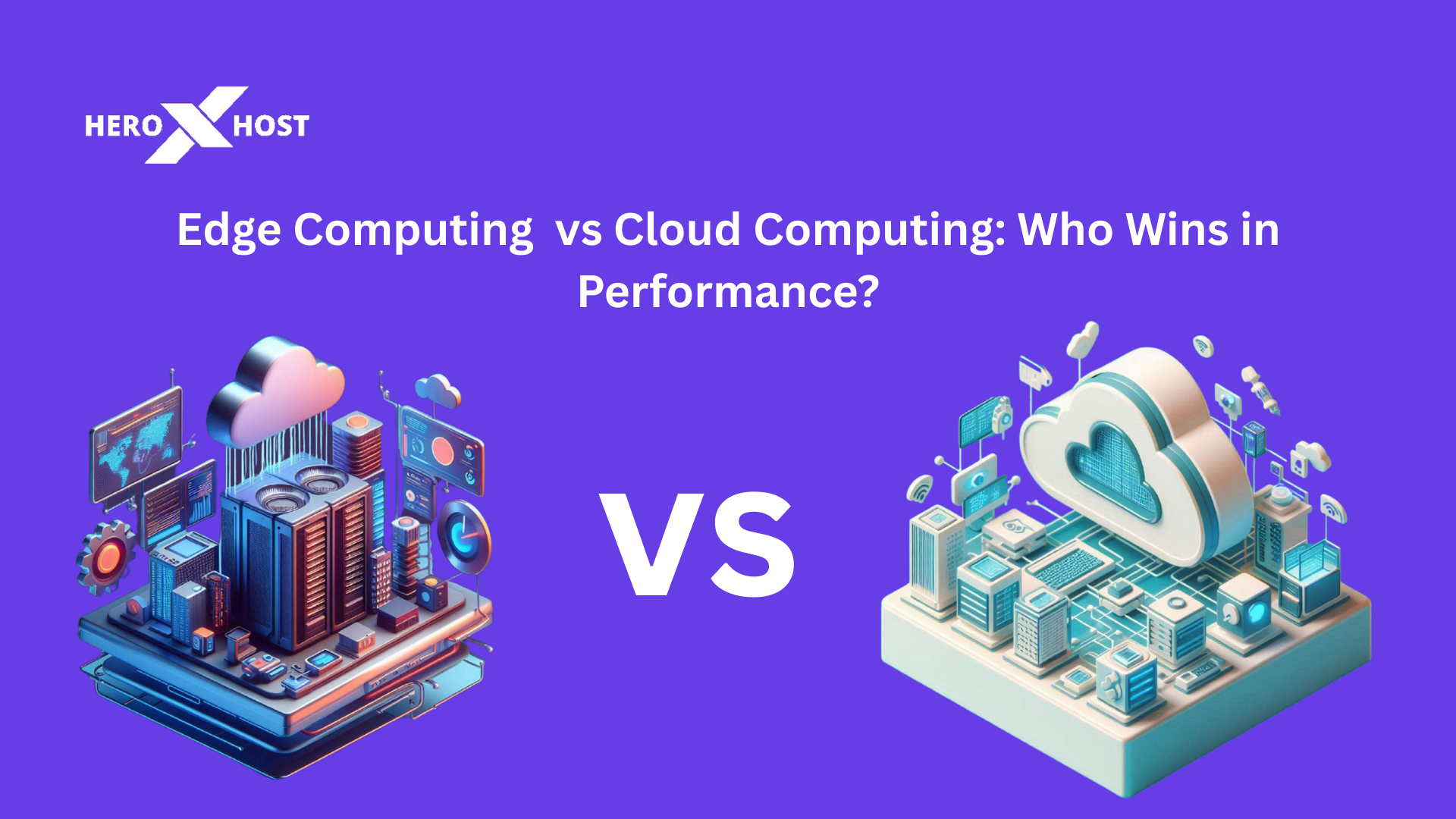
In the fast-paced digital world, businesses are constantly looking for ways to improve speed, reliability, and efficiency. Two of the most popular technologies powering this transformation are Edge Computing and Cloud Computing. Both have changed the way data is stored, processed, and delivered—but the real question is: Edge Computing vs Cloud Computing—Which delivers better performance?
This blog explores the differences, benefits, and performance factors of both technologies to help you understand which one is right for your business.
What is Cloud Computing?
Cloud Computing is the delivery of services such as servers, storage, databases, networking, and applications over the internet. Instead of relying on physical infrastructure, businesses can access resources on demand from cloud providers.
Key features of Cloud Computing:
- Centralized data centers located across different regions.
- On-demand scalability with pay-as-you-go pricing.
- High availability and disaster recovery options.
- Access from anywhere with an internet connection.
Cloud hosting has been a reliable choice for startups, enterprises, and developers because of its flexibility and cost-effectiveness.
What is Edge Computing?
Edge Computing takes a different approach. Rather than sending all information to distant cloud servers, Edge Computing handles data near its source—at the “edge” of the network. This enables real-time processing and minimizes delays from sending data to and from the cloud.
Key features of Edge Computing:
- Data processing happens near the source (IoT devices, local servers, or gateways).
- Reduced latency due to real-time analysis.
- Improved security as sensitive data doesn’t always travel long distances.
- Better suited for time-sensitive applications like healthcare monitoring, self-driving cars, and industrial automation.
Edge Computing vs Cloud Computing: The Core Differences
Let’s break down the key differences between Edge Computing and Cloud Computing:
| Feature | Cloud Computing | Edge Computing |
|---|---|---|
| Data Processing | Cloud Computing handles it in centralized data centers | Edge Computing processes it closer to the data source. |
| Latency | Slight delays due to distance | Very low latency, near real-time |
| Scalability | Highly scalable with global infrastructure | Limited scalability depending on edge devices |
| Use Cases | Web hosting, enterprise applications, SaaS, storage | IoT, healthcare, manufacturing, real-time analytics |
| Cost | Pay for usage, cost-effective for large workloads | May require higher investment in edge devices |
Which One Delivers Better Performance?
Performance depends on the specific needs of your business.
-
Cloud Computing Performance
Cloud platforms provide high reliability, global reach, and strong computing power. For businesses that need storage, software hosting, and large-scale applications, cloud hosting is ideal. -
Edge Computing Performance
Edge offers real-time data processing and ultra-low latency. Industries like autonomous vehicles, robotics, video streaming, and IoT applications benefit most from edge computing.
Verdict:
If your business requires instant response and real-time processing, Edge Computing takes the lead in performance. For scalability, cost-efficiency, and wide accessibility, Cloud Computing is the winner. In many cases, businesses use a hybrid approach, combining the power of both.
Benefits of Cloud Computing
- Cost-effective for businesses of all sizes.
- Easy scalability and flexibility.
- Strong disaster recovery and backup systems.
- Ideal for applications that don’t require real-time responses.
Benefits of Edge Computing
- Cuts down latency by handling data near its origin.
- Improves security by minimizing data travel.
- Perfect for applications where real-time decision-making is critical.
- Enhances user experience with faster response times.
When to Choose Cloud vs Edge
-
Choose Cloud Computing if:
You need large-scale data storage, global reach, cost efficiency, and scalability. -
Choose Edge Computing if:
You require ultra-fast performance, real-time analytics, or are dealing with IoT and time-sensitive applications.
For many modern businesses, a combination of both—known as Edge-Cloud synergy—delivers the best balance between performance, cost, and efficiency.
Conclusion
The debate on Edge Computing vs Cloud Computing doesn’t have a one-size-fits-all answer. Each technology offers unique strengths that suit different business models. Cloud Computing provides global scalability and cost-efficiency, while Edge Computing ensures real-time responsiveness and low latency.
As businesses continue to adopt digital-first strategies, the future lies in leveraging both to build flexible, secure, and performance-driven solutions.
Frequently Asked Questions
Q1: Is Edge Computing replacing Cloud Computing?
No. Edge is not a replacement but a complement to the cloud. Both work together to optimize performance for different use cases.
Q2: Which is cheaper, Edge Computing or Cloud Computing?
Cloud Computing is generally more cost-effective. Edge Computing may require higher initial investments but delivers performance benefits in real-time applications.
Q3: Which is better for small businesses?
Small businesses usually benefit from Cloud Computing due to its flexibility and affordability. Edge Computing works best for industries that demand real-time data processing.
Q4: Can Edge and Cloud work together?
Yes, many organizations use a hybrid approach, combining Edge Computing’s real-time processing with the scalability of Cloud Computing.